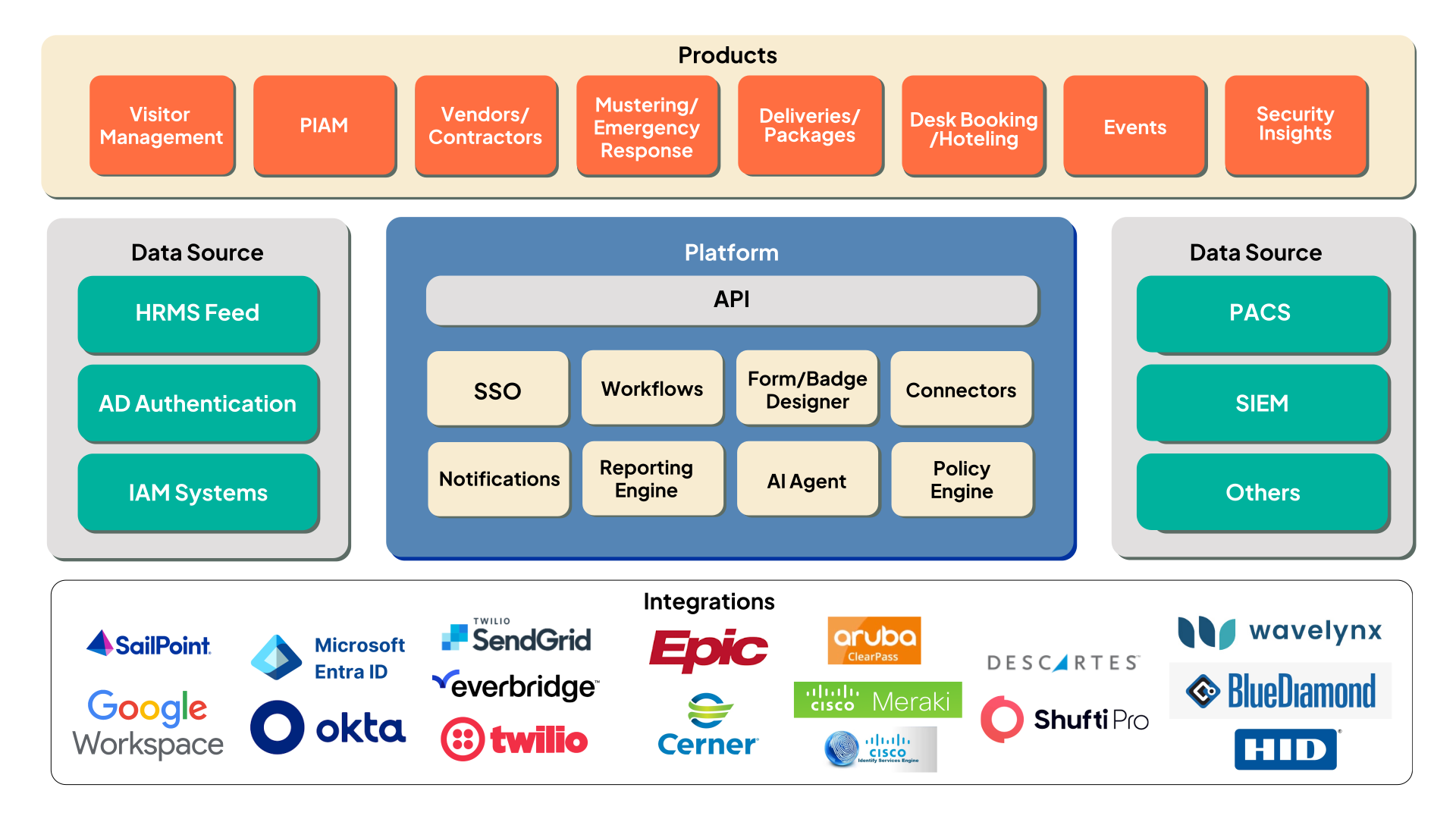
A Scalable and Secure Framework
A cloud-native, API-driven architecture enabling unified visitor, identity, and access control management across enterprise environments.
Approximately 56% of Gen Z and 43% of millennials find social media content more relevant than traditional TV or movies [11]. On average, Gen Z spends nearly 50 minutes more per day on social platforms compared to the average consumer [11].
This has given rise to (Free Ad-Supported Television), like Pluto TV and Tubi, which reintroduce the "linear experience" but with a digital twist. This suggests that while on-demand is king, the paradox of choice (spending 45 minutes deciding what to watch) is driving a return to curated, lean-back experiences.
The landscape of entertainment and media content has undergone a radical transformation, evolving from scheduled broadcasts to a personalized, on-demand digital ecosystem. Today, content is no longer just something we consume; it is a continuous stream of engagement that defines modern culture. The Digital Shift: From Linear to On-Demand
Mobile devices currently account for over 43% of entertainment consumption [12].
This fragmentation has produced two contradictory trends. On one hand, we are living in a "Peak TV" era where the volume of scripted is historically high. On the other hand, consumers suffer from "subscription fatigue" and decision paralysis—spending more time scrolling for something to watch than actually watching it.
Enhancing security and access control across corporate, healthcare, education, government, and other sectors with an AI-powered visitor management solution for intelligent identity verification and risk mitigation.

Accelerate workplace security by managing employee, contractor, and visitor access.

Adhere to compliance and security by regulating access to sensitive areas of everyone.

Empower tenants across a wide range of locations to assign and regulate access.

Oversee patient visits, appointment visits, employees and temporary check-ins.

Safeguard students with visitor screening w.r.t parents and guardians.

Track and control access to critical infrastructure for clear audit trails and reports.

Visitor Management and Access Governance for employees, contractors and vendors.

Maintain strict access control and real-time location tracking of the confidential data.
Optimize automated onboarding workflows and centralized access governance to enforce role-based policies, ensuring easy identity provisioning, real-time access control, and regulatory compliance across enterprise systems.
Provision role-based access making sure that new employees have appropriate permissions.
Adjust access levels whenever employees switch roles or departments, accordingly.
Enable employees to request additional access with approvals managed via workflows.
Conduct periodic user access reviews to validate compliance with security policies.
Deactivate user accounts and revoke system access immediately upon termination.


Trusted in countries across the world.
Speaks multiple languages.
Processed visitors in total.
Integrate Splan Visitor Management & PIAM for Unified Identity Governance

Access Control Systems

Adaptable Deployments

Modern Access

Total Identity

Uninterrupted Connectivity

Extra Security Layer

Extended Patient Care

Mustering and Evacuation

API Communication
Approximately 56% of Gen Z and 43% of millennials find social media content more relevant than traditional TV or movies [11]. On average, Gen Z spends nearly 50 minutes more per day on social platforms compared to the average consumer [11].
This has given rise to (Free Ad-Supported Television), like Pluto TV and Tubi, which reintroduce the "linear experience" but with a digital twist. This suggests that while on-demand is king, the paradox of choice (spending 45 minutes deciding what to watch) is driving a return to curated, lean-back experiences.
The landscape of entertainment and media content has undergone a radical transformation, evolving from scheduled broadcasts to a personalized, on-demand digital ecosystem. Today, content is no longer just something we consume; it is a continuous stream of engagement that defines modern culture. The Digital Shift: From Linear to On-Demand
Mobile devices currently account for over 43% of entertainment consumption [12].
This fragmentation has produced two contradictory trends. On one hand, we are living in a "Peak TV" era where the volume of scripted is historically high. On the other hand, consumers suffer from "subscription fatigue" and decision paralysis—spending more time scrolling for something to watch than actually watching it.